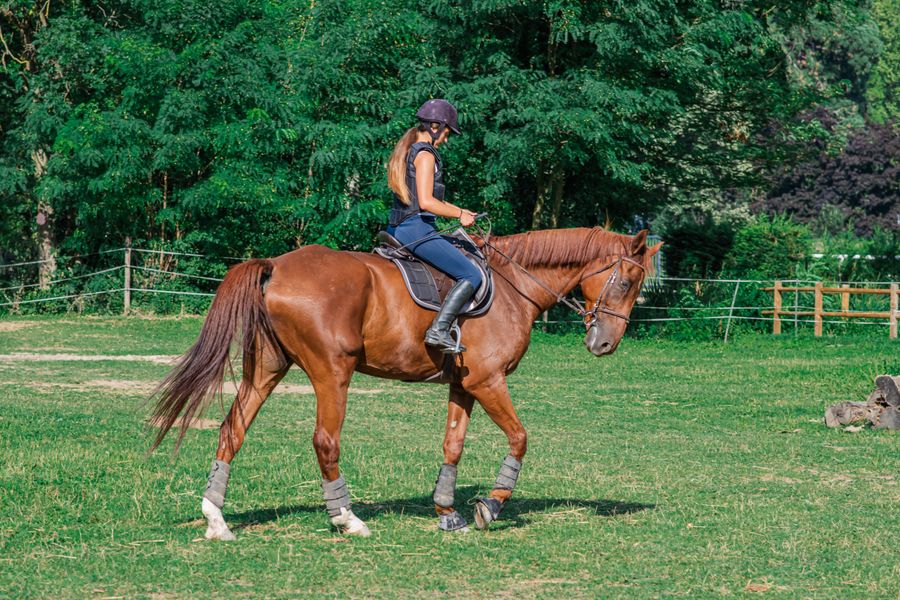
Master the art of classical horsemanship by identifying and correcting the seven most common beginner riding mistakes. Hussar Stables in Palmdale, CA, offers expert guidance for riders in Lancaster, Santa Clarita, and the Antelope Valley.
Every equestrian journey begins with a single step into the stirrup. Whether you are taking your very first lesson or returning to the saddle after years away, the path to classical horsemanship is paved with inevitable learning curves. At Hussar Stables, nestled in the scenic high desert of Palmdale, CA, we believe that mastering the fundamentals is the cornerstone of true equestrian artistry. Our members, traveling from Lancaster, Santa Clarita, and throughout the Antelope Valley, understand that riding is not merely about staying on the horse; it is about developing a profound, harmonious dialogue with your equine partner.
In our dedication to Working Equitation and the refined principles of Alta Escuela, we observe that many riders encounter the same initial hurdles. Recognizing these common pitfalls is the first step toward correcting them. By addressing these foundational errors early on, you can cultivate a balanced, independent seat and a soft, communicative hand. Today, we explore the seven most common beginner riding mistakes and provide actionable, expert guidance on how to fix them.
1. Gripping With the Knee
One of the most instinctive reactions when a rider feels unbalanced or insecure is to pinch or grip the saddle with their knees. While this might momentarily feel like a secure anchor, gripping with the knee actually acts as a pivot point. It pushes your lower leg away from the horse\'s side, destabilizes your seat, and can even inadvertently signal the horse to hollow its back or speed up. In classical dressage and Working Equitation, a deep, secure seat relies on balance and gravity, not muscular tension.
To correct this, focus on allowing your leg to drape naturally around the horse\'s barrel. Imagine your leg as a wet towel, heavy and relaxed from the hip down through the heel. When you feel the urge to pinch, consciously take a deep breath, open your hip angle, and let your weight sink down into your stirrups. Practicing riding without stirrups on a lunge line under the watchful eye of an instructor can immensely help in developing an independent, balanced seat that does not rely on the knee for security.
2. Looking Down at the Horse
It is entirely natural to want to look at what you are trying to control. Many beginners spend their entire ride staring intently at their horse\'s neck, ears, or the pommel of the saddle. However, where your eyes go, your head follows; where your head goes, your shoulders drop; and suddenly, your entire center of gravity is pitched forward. Looking down not only compromises your posture but also severely limits your spatial awareness in the arena.
The fix is as simple as it is transformative: keep your eyes up and look where you want to go. Your horse can feel the subtle shifts in your weight when you turn your head to look ahead. By focusing on a point in the distance or the next letter in the dressage arena, you naturally align your spine, open your chest, and sit deeper in the saddle. This elevated gaze fosters a commanding, elegant posture that is essential for the sophisticated maneuvers of Alta Escuela.
3. Riding With Stiff, Unforgiving Hands
The reins are the primary line of communication between your hands and the horse\'s sensitive mouth. Beginners often hold the reins with rigid, locked arms, mistakenly believing that a tight grip equates to better control. In reality, stiff hands create a harsh, unyielding contact that causes the horse to brace, toss its head, or become heavy on the forehand. True horsemanship requires an elastic, following connection.
To develop soft, educated hands, you must first ensure that your elbows are bent and resting softly near your sides. Your arms should act as shock absorbers, moving in rhythm with the horse\'s natural head and neck motion at the walk, trot, and canter. Think of holding the reins as if you are holding two small birds—firmly enough that they do not escape, but gently enough that you do not crush them. Cultivating this elastic contact is a lifelong pursuit, but it begins with the conscious release of tension in your shoulders, arms, and wrists.
4. Tipping Forward From the Pelvis
Many novice riders adopt a defensive, fetal position, collapsing their chest and tipping their upper body forward. This posture often stems from a fear of falling backward or a misunderstanding of how to absorb the horse\'s movement. Tipping forward places your weight over the horse\'s fragile forehand, making it difficult for the animal to balance and engage its hindquarters. It also renders your seat aids entirely ineffective.
Correcting this requires a fundamental shift in how you carry your core. You must sit squarely on your seat bones, maintaining a vertical line from your ear, through your shoulder and hip, straight down to your heel. Engage your core muscles to stabilize your torso, and imagine a string pulling the crown of your head toward the sky. When transitioning to a faster gait, resist the urge to lean forward; instead, allow your hips to follow the sweeping motion of the horse\'s back while keeping your shoulders tall and proud.
5. Posting on the Wrong Diagonal
The posting trot is a rhythmic rising and sitting motion that makes the bouncy two-beat gait comfortable for both horse and rider. However, posting on the wrong diagonal—rising when the horse\'s outside shoulder falls and sitting when it rises—throws the horse off balance, particularly on circles and through corners. It is a subtle mistake that can hinder the horse\'s ability to step deeply under its center of gravity.
To master your diagonals, you must learn to feel the horse\'s movement rather than just looking for it. As you ride, glance down briefly with your eyes—not your whole head—at the horse\'s outside shoulder. You should rise out of the saddle when that outside shoulder moves forward. A helpful mantra for beginners is \"rise and fall with the leg on the wall.\" With time and practice, your body will naturally internalize the rhythm, and you will be able to feel the correct diagonal without needing to look.
6. Holding Your Breath
Riding is a physically demanding and mentally engaging sport. In moments of intense concentration or mild anxiety, beginners frequently hold their breath. This unconscious habit creates a cascade of tension throughout the body. When you hold your breath, your muscles become rigid, your seat becomes stiff, and your horse instantly feels that anxiety, often mirroring it with its own tension or spookiness.
Breathing is the ultimate tool for relaxation and rhythm. Make a conscious effort to breathe deeply and rhythmically from your diaphragm. If you find yourself holding your breath, try singing a song softly to yourself, counting your horse\'s strides out loud, or exhaling audibly on every downward beat of the posting trot. A deep, intentional exhale can instantly soften your seat and signal to your horse that all is well, fostering a calm, cooperative partnership.
7. Relying Solely on the Reins for Steering
A common misconception among new riders is that the reins are the steering wheel and the legs are the gas pedal. This oversimplification leads to pulling the horse\'s head around turns, which throws the horse off balance and creates resistance. In the refined disciplines of Working Equitation and classical dressage, the hands are actually the last aid applied; the primary steering mechanisms are the seat, weight, and legs.
To fix this, you must learn to ride your horse from back to front. When executing a turn, look in the direction you wish to go, shift your weight slightly onto your inside seat bone, and apply pressure with your inside leg at the girth to bend the horse around it. Your outside leg should be positioned slightly behind the girth to prevent the hindquarters from swinging out. The reins should merely support the turn, maintaining a soft, guiding contact rather than forcefully pulling the horse\'s nose.
The journey to becoming a refined, effective equestrian is a marathon, not a sprint. Every rider, from the greenest beginner to the most seasoned master, has had to overcome these fundamental challenges. By acknowledging these common mistakes and actively working to correct them, you are laying the groundwork for a beautiful, harmonious partnership with your horse.
At Hussar Stables, we are passionately committed to guiding riders through this transformative process. Our premium, members-only facility in Palmdale offers an unparalleled environment for mastering the art of classical horsemanship. Whether you are commuting from Lancaster, Santa Clarita, or anywhere in the Antelope Valley, our expert instructors are here to help you refine your technique and achieve your equestrian goals. If you are ready to elevate your riding and experience the profound connection of Working Equitation, we invite you to begin your journey with us. Book an Intro Lesson today at hussarstables.com and discover the elegance of true horsemanship.
Ready to Experience This in Person?
Book a private Intro Lesson at Hussar Stables and discover why families from Palmdale, Lancaster, and Santa Clarita choose our members-only riding club.
Book Intro Lesson