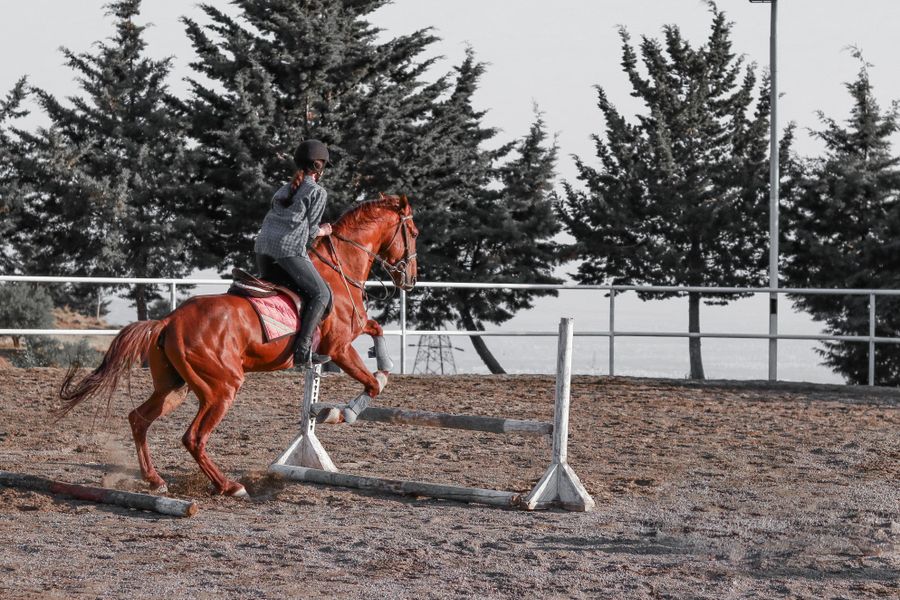
Uncover the five essential pillars of classical horsemanship—rhythm, suppleness, contact, impulsion, and straightness—and learn how Hussar Stables in Palmdale, CA, guides riders to master these foundational principles for a harmonious partnership.
At Hussar Stables, nestled in the serene landscapes of Palmdale, CA, we believe that true horsemanship is an art form, a dance between horse and rider built on mutual understanding and respect. Our dedication to classical horsemanship and Working Equitation sets us apart, fostering a deep connection that transcends mere riding. For those in Lancaster, Santa Clarita, and across the Antelope Valley seeking to elevate their equestrian journey, understanding the foundational principles of classical training is paramount. These principles, often referred to as the Training Scale, are not just a sequence of exercises but a philosophy that guides every interaction, every stride, and every moment in the saddle.
The classical training scale is a progressive system designed to develop a horse physically and mentally, enhancing its natural abilities and creating a willing, harmonious partner. It’s a journey, not a destination, and mastering its pillars is a lifelong pursuit for any serious rider. Let\'s delve into these five essential pillars.
Pillar 1: Rhythm
Rhythm is the unwavering regularity and tempo of the horse\'s gaits – walk, trot, and canter. It’s the heartbeat of your ride, the consistent beat that allows both horse and rider to find their balance and flow. A horse moving in good rhythm is relaxed, confident, and predictable, making it easier for the rider to influence and guide. Without a consistent rhythm, all other elements of training become challenging, if not impossible.
Developing Rhythm
To establish and maintain rhythm, focus on riding accurate figures and transitions. Pay close attention to the horse\'s footfalls; in the walk, it\'s a clear four-beat; in the trot, a two-beat; and in the canter, a three-beat. Use your seat and legs to encourage a consistent tempo, avoiding the temptation to constantly push or hold. At Hussar Stables, our experienced instructors emphasize the importance of developing a rider\'s feel for rhythm, helping them to recognize and correct inconsistencies. This often involves exercises that encourage the horse to find its natural, unhurried pace, allowing it to relax into its work.
Pillar 2: Suppleness
Suppleness, or looseness, refers to the horse\'s physical and mental relaxation, allowing it to move freely and without tension through its entire body. A supple horse is able to bend equally on both sides, engage its back, and move with elasticity. This physical freedom is intrinsically linked to mental relaxation; a tense horse cannot be truly supple. Suppleness is crucial for preventing injury, improving balance, and enabling the horse to carry the rider with ease.
Developing Suppleness
Exercises such as circles, serpentines, and lateral movements like leg-yielding and shoulder-in are invaluable for developing suppleness. These movements encourage the horse to stretch and bend through its body, releasing tension. The goal is to achieve a feeling of elasticity and responsiveness. Our training at Hussar Stables often incorporates classical gymnastic exercises that systematically improve the horse\'s flexibility and range of motion, preparing them for more advanced movements in Working Equitation and Alta Escuela.
Pillar 3: Contact
Contact is the soft, consistent, and elastic connection between the rider\'s hand and the horse\'s mouth through the reins. It\'s not about pulling or holding, but about a communication line that allows the rider to feel the horse\'s mouth and the horse to feel the rider\'s hand. Good contact is a two-way street, conveying subtle signals and encouraging the horse to seek the bit, round its back, and engage its hindquarters. It’s the conduit through which the rider can influence the horse\'s balance, pace, and direction.
Developing Contact
Achieving correct contact requires a steady, independent seat and soft, following hands. Avoid gripping the reins tightly or allowing them to become too loose. Focus on maintaining a consistent, light pressure that encourages the horse to stretch forward into the bit. Exercises that promote self-carriage and engagement of the hindquarters, such as transitions and riding forward into a soft half-halt, are key. At Hussar Stables, we teach riders to develop an educated hand, understanding that the reins are not for steering alone, but for a nuanced conversation with the horse.
Pillar 4: Impulsion
Impulsion is the controlled, forward-driving energy generated from the horse\'s hindquarters, channeled through a supple back, and expressed in energetic, elastic gaits. It’s more than just speed; it’s the desire to move forward with power and enthusiasm, yet remaining obedient and responsive to the rider\'s aids. Impulsion is the engine of the horse, providing the energy for collection and more advanced movements.
Developing Impulsion
To develop impulsion, the rider must effectively use their seat and leg aids to encourage the horse to step actively under itself with its hind legs. Transitions between gaits, riding up and down hills, and incorporating poles and small jumps can help build strength and enthusiasm. It’s crucial to distinguish between impulsion and rushing; a horse with true impulsion maintains its rhythm and balance. Our training programs at Hussar Stables focus on building the horse\'s physical strength and mental willingness to generate and sustain impulsion, a cornerstone for the dynamic movements seen in Working Equitation.
Pillar 5: Straightness
Straightness means that the horse is aligned from nose to tail, with its hind feet following in the tracks of its front feet, especially on straight lines. On curved lines, the horse should be bent to the degree of the curve, with its body following the arc. A straight horse is balanced, carries the rider more efficiently, and can use its hindquarters effectively. Most horses are naturally crooked, favoring one side, and it is the rider\'s job to correct this asymmetry.
Developing Straightness
Exercises that promote suppleness and engagement are also vital for straightness. Riding accurate lines, circles, and serpentines, combined with lateral work, helps to identify and correct the horse\'s natural crookedness. The rider uses their aids to encourage the horse to step evenly with both hind legs and to maintain a consistent bend through its body. At Hussar Stables, we emphasize the importance of developing the rider\'s awareness of their own body and how it influences the horse\'s straightness, ensuring a balanced and harmonious partnership.
The Pinnacle: Collection
While not one of the initial five pillars, Collection is the ultimate goal achieved through the mastery of rhythm, suppleness, contact, impulsion, and straightness. Collection is the culmination of these elements, where the horse lowers its hindquarters, rounds its back, and elevates its forehand, moving with increased engagement, lightness, and agility. It is a state of perfect balance and self-carriage, allowing for the most intricate and expressive movements.
Achieving Collection
Collection is not forced but developed gradually as the horse gains strength, suppleness, and understanding. It requires the horse to carry more weight on its hindquarters, freeing the forehand. This is achieved through careful gymnastic training, focusing on strengthening the core and hindquarters, and refining the communication between horse and rider. At Hussar Stables, our advanced programs in Alta Escuela demonstrate the beauty and power of a truly collected horse, a testament to years of dedicated training and the harmonious partnership between horse and rider.
Elevate Your Horsemanship with Hussar Stables
Mastering the pillars of classical horsemanship is a rewarding journey that deepens your connection with your horse and unlocks new levels of performance. Whether you are just beginning your equestrian adventure or seeking to refine advanced skills, Hussar Stables in Palmdale, CA, offers unparalleled instruction in classical horsemanship and Working Equitation. Our serene facility, serving riders from Lancaster, Santa Clarita, and the wider Antelope Valley, provides the ideal environment for you and your horse to thrive. Discover the difference that dedicated, classical training can make.
Ready to embark on a transformative equestrian experience? Book an Intro Lesson today at hussarstables.com and take the first step towards mastering the art of classical horsemanship. Your journey to a deeper, more harmonious partnership awaits.
Ready to Experience This in Person?
Book a private Intro Lesson at Hussar Stables and discover why families from Palmdale, Lancaster, and Santa Clarita choose our members-only riding club.
Book Intro Lesson