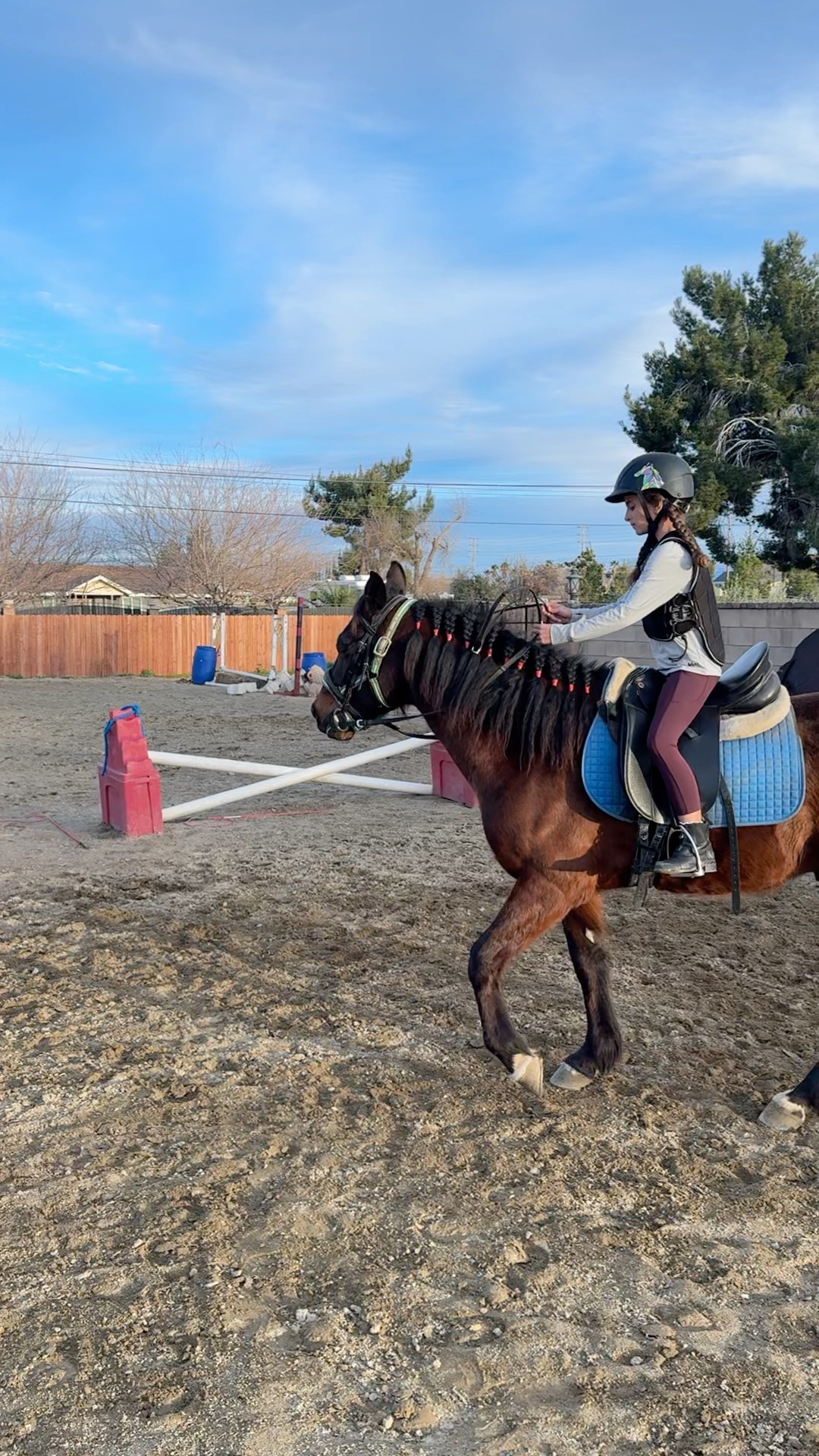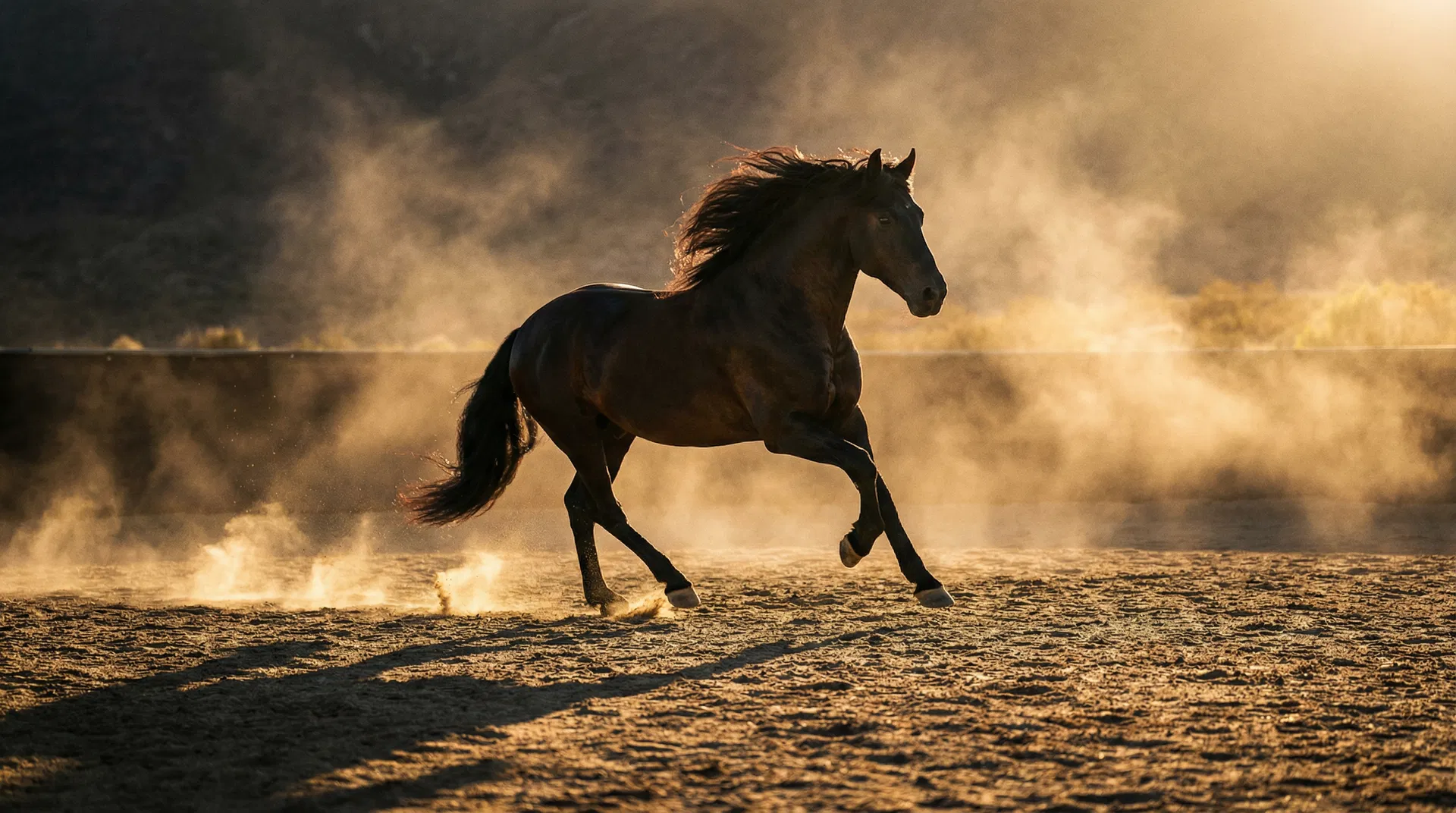
The Speed phase is the most thrilling part of Working Equitation. This training guide covers the classical exercises and drills you need to build speed without sacrificing control.
The key to 'How to Prepare Your Horse for the Working Equitation Speed Trial' is developing an independent seat before focusing on rein aids. At Hussar Stables, we teach balance first — your position, weight, and leg aids are more powerful than any rein signal, and mastering them is what separates riders who progress quickly from those who plateau.
For many riders, the Speed phase (Phase 3) is the most exhilarating — and intimidating — part of Working Equitation (WE). It is the phase that separates WE from traditional competitive dressage and truly tests the partnership between horse and rider.
In the Ease of Handling (EOH) phase, you navigate the obstacle course with precision, calmness, and style. In the Speed phase, you navigate the exact same course, but the only thing the judge cares about is the clock.
The goal is to go as fast as possible without incurring time penalties for knocking over obstacles. This requires a horse that can instantly transition from a highly collected, controlled canter to a flat-out gallop, and back again, without losing its mind or ignoring the rider's aids.
If you are transitioning from dressage or western pleasure, the idea of galloping your horse at a wooden bridge or a slalom of poles might seem terrifying. How do you train a horse to be fast without making them anxious, hot, or dangerous?
Continue Reading · Working Equitation
What to Expect at Your First Working Equitation Show
7 min read
Here is a step-by-step guide to preparing your horse for the Working Equitation Speed trial, rooted in classical training principles.
1. The Prerequisite: Absolute Control in the EOH Phase
Before you even think about adding speed, your horse must be flawless in the Ease of Handling phase.
If your horse hesitates at the bridge, rushes the gate, or breaks gait during the slalom in the EOH phase, adding speed will only magnify those problems. Speed does not fix training holes; it exposes them.
The test is simple: can you ride the entire EOH course at a relaxed, rhythmic walk and canter, using nearly invisible aids? Does your horse wait for your cue before approaching an obstacle? If the answer is yes, you are ready to start introducing speed.
Continue Reading · Riding Technique
Mastering the Bridge: A Step-by-Step Guide to Working Equitation Obstacles
8 min read
2. The "Accordion" Exercise: Developing the Transitions
The secret to a fast Speed trial is not actually galloping everywhere. The secret is the transitions. The fastest riders are the ones who can gallop the straightaways and instantly collect their horse to navigate the tight turns and complex obstacles.
You must develop your horse's ability to lengthen and shorten its stride like an accordion, without resistance.
On a large 20-meter circle or along the long side of the arena, establish a balanced, collected canter. Ask the horse to lengthen its stride for 5 to 10 strides, moving toward a hand gallop. Then, using your seat and core (not just pulling on the reins), ask the horse to collect back to a slow, balanced canter for 5 to 10 strides.
The horse must remain soft in the bridle and responsive to your seat. If they throw their head up, hollow their back, or lean on the bit when you ask them to collect, you must fix that before adding more speed.
Continue Reading · Working Equitation
Working Equitation Scoring Explained: How Judges Evaluate Your Ride
8 min read
3. Introducing Speed to the Obstacles (Slowly)
Do not run the entire course at top speed on your first attempt. Break the course down into individual obstacles and introduce speed systematically.
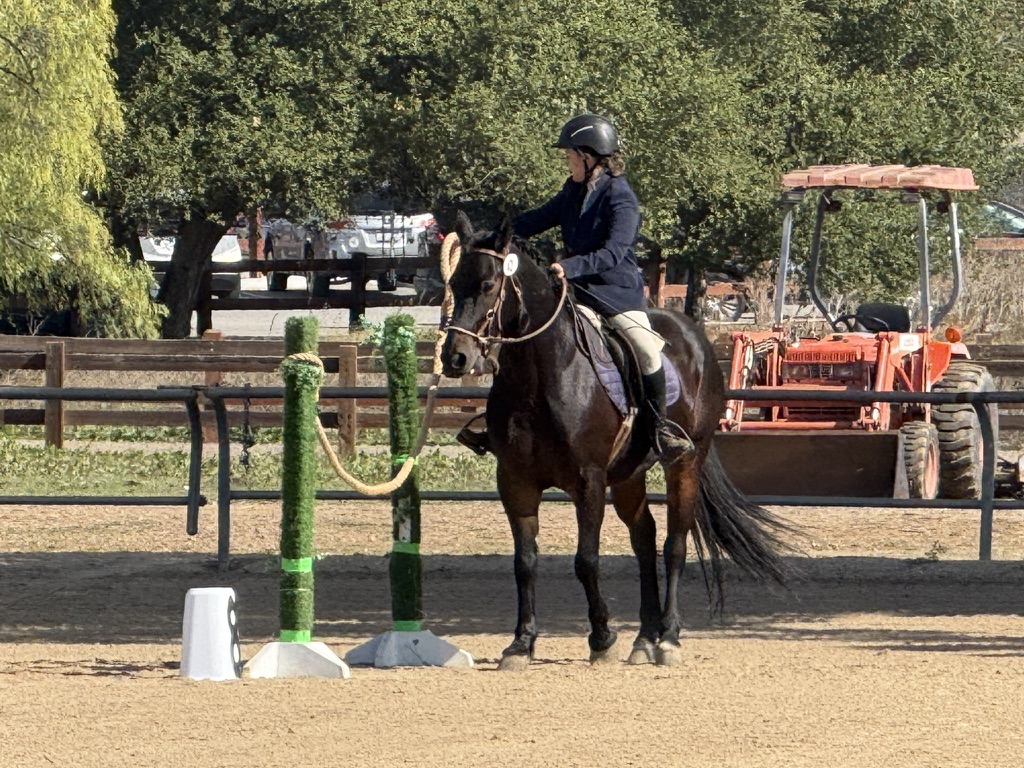
The "Sprint and Halt" Drill. This is one of the most effective ways to teach a horse to listen to you even when their adrenaline is high. Set up a simple obstacle, like the bridge or a single jump standard. Start 20 meters away. Ask for a brisk, forward canter toward the obstacle. Crucially, approximately 5 to 10 meters before the obstacle, ask the horse to halt completely. Let the horse stand quietly for a few seconds, taking a deep breath. Then walk calmly over the obstacle.
This drill teaches the horse that just because they are going fast does not mean they get to rush the obstacle. It installs a "brakes check" and reminds them that you are still in control of the approach.
The Slalom (Bending Poles). The slalom is where many riders lose time because their horse loses balance in the changes of lead. Practice the slalom at a collected canter, focusing entirely on the quality of the change. Once the changes are fluid, begin to ride the straightaways between the poles slightly faster, but always insist that the horse collects and balances before the change of direction.
4. The Mental Game: Managing Adrenaline
The Speed phase is exciting, and horses are incredibly perceptive to our adrenaline. If you tense up, grip with your legs, and hold your breath, your horse will assume there is a predator chasing you and will react accordingly.
Breathe — it sounds simple, but consciously exhaling as you approach a tricky obstacle signals to your horse that they can relax. Focus on riding the most efficient, tightest lines between the obstacles, rather than just galloping wildly. A rider who takes tight turns at a collected canter will often beat a rider who gallops fast but takes wide, sloppy turns.
After you cross the finish line, do not just let your horse gallop around the arena. Immediately ask for a downward transition to a walk and let them stretch their neck. Reward them for returning to a state of calmness.
Classical Principles for Modern Speed
At Hussar Stables, we believe that the principles of Alta Escuela are the ultimate preparation for the Working Equitation Speed trial. A horse that has been classically trained to carry its weight on its hindquarters, yield to the lightest seat aids, and remain supple through its back is a horse that can safely and brilliantly navigate a speed course. We don't teach our riders to "run and gun"; we teach them to ride with tact, balance, and strategic precision.
- Balance before reins — an independent seat is the foundation of all good riding
- The correct position: ear-shoulder-hip-heel alignment when viewed from the side
- Aids are applied through weight, leg, and rein — in that order of priority
- Collection is the result of correct training, not forcing the horse's head down
- Consistent, patient repetition builds the muscle memory that makes technique automatic
More in Riding Technique
Riding Technique: The Complete Guide to Learning and Progressing as an Equestrian
16 min read
Mastering the Bridge: A Step-by-Step Guide to Working Equitation Obstacles
8 min read
How Alta Escuela Principles Build Better Riders (Even if You Never Compete)
7 min read
Why Unmounted Horsemanship is Just as Important as Riding
6 min read
Classical vs. Modern Dressage: What Every Rider Should Know
5 min read
Understanding Collection: The Most Misunderstood Concept in Riding
8 min read
Have a question?
Text us — we reply fast.
(661) 227-3214 · Hussar Stables, Palmdale CA
Ready to Experience This in Person?
Book a private Intro Lesson at Hussar Stables and discover why families from Palmdale, Lancaster, and Santa Clarita choose our members-only riding club.
Book Intro Lesson