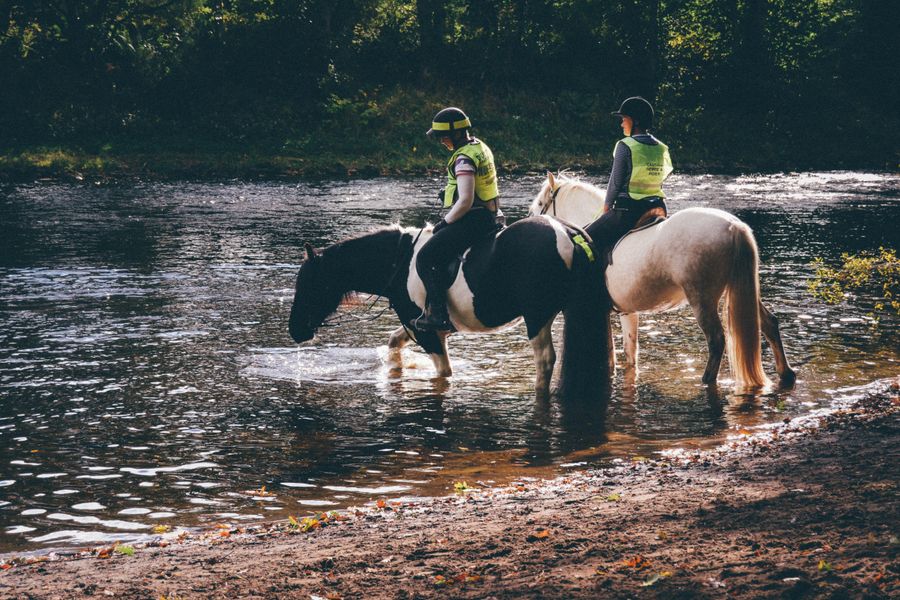
Unlock the secrets of Working Equitation judging with our detailed guide. Learn how judges evaluate harmony, technical skill, and precision in Dressage, Ease of Handling, and Speed phases, and elevate your ride at Hussar Stables.
Welcome to The Equestrian Journal, where we delve into the nuances of horsemanship that define excellence. Today, we turn our attention to Working Equitation (WE), a discipline that beautifully marries classical dressage with the practical skills of ranch work. For those who aspire to master this intricate art, understanding the judging criteria is paramount. At Hussar Stables, nestled in the heart of Palmdale, CA, we believe that true mastery comes from a deep appreciation of every element, from the subtle cues to the precise execution. Whether you\'re riding with us from Lancaster, Santa Clarita, or anywhere across the Antelope Valley, a clear grasp of how judges evaluate your ride will elevate your performance.
The Pillars of Working Equitation Judging
Working Equitation competitions are typically divided into three phases: Dressage, Ease of Handling (EOH), and Speed. Each phase tests a different facet of the horse and rider\'s partnership, and judges assess these phases with a keen eye for harmony, precision, and efficiency. While the Dressage phase is familiar to many, EOH and Speed introduce unique challenges that truly showcase the versatility of the Working Equitation horse.
Dressage: The Foundation of Harmony
The Dressage phase in Working Equitation is designed to demonstrate the horse\'s training, obedience, and suppleness. Judges look for the same qualities as in traditional dressage: rhythm, suppleness, contact, impulsion, and straightness, culminating in the overall harmony of the partnership. However, there\'s an added emphasis on the horse\'s ability to perform movements that are practical for working with cattle, such as collected and extended gaits, lateral movements, and flying changes. The horse should appear willing, attentive, and responsive to the rider\'s aids, moving with grace and power.
Judges award marks on a scale, typically from 0 to 10, for each movement, with half-points often used to differentiate performances. A score of 10 signifies excellent, while 0 indicates the movement was not performed. The collective marks, which include aspects like impulsion, submission, and rider\'s seat and aids, contribute significantly to the overall score. A high harmony score in Dressage sets the stage for success in the subsequent phases.
Ease of Handling (EOH): Navigating Obstacles with Finesse
The Ease of Handling phase is arguably the most visually captivating and technically demanding part of Working Equitation. Here, horse and rider navigate a course of obstacles designed to simulate challenges encountered during ranch work. These obstacles can include gates, bridges, barrels, poles, and the iconic garrocha (a long pole used for working cattle). The objective is not just to clear the obstacles, but to do so with precision, control, and elegance.
What Judges Look For in EOH
Judges in the EOH phase are primarily looking for the horse\'s obedience, agility, and willingness to perform the tasks. The technical score is paramount here. Each obstacle is judged individually, and points are awarded for the correctness of the approach, execution, and departure. For instance, when opening and closing a gate, the horse should remain calm and steady, allowing the rider to manipulate the gate without resistance. The rider\'s aids should be subtle and effective, demonstrating a deep understanding of classical horsemanship principles.
Harmony remains a crucial element. A horse that rushes, resists, or appears tense will lose points, even if the obstacle is technically cleared. The ideal performance is one where the horse and rider move as a single unit, anticipating each other\'s intentions. Judges pay close attention to the horse\'s balance, cadence, and the fluidity of its movements between obstacles. Transitions should be smooth, and the horse should maintain a consistent rhythm throughout the course. The rider\'s posture, balance, and effective use of aids are also under scrutiny, as they directly influence the horse\'s performance.
Common obstacles and judging points:
Gate:* Horse stands quietly, allowing rider to open and close without moving. Precision in positioning is key.
Bridge:* Horse walks calmly and confidently over the bridge. Hesitation or rushing will be penalized.
Slalom:* Horse navigates poles with suppleness and correct bending. Smooth, flowing turns are desired.
Cup:* Rider removes a cup from one pole and places it on another, demonstrating precision and control.
Garrocha:* Horse and rider demonstrate control and partnership while handling the garrocha, often involving a small circle or figure-eight.
Speed: The Test of Agility and Trust
The Speed phase is a thrilling display of the horse and rider\'s athleticism and trust. It typically involves navigating a similar course of obstacles as the EOH phase, but against the clock. While speed is the primary objective, accuracy and safety are equally important. Penalties are incurred for knocking down obstacles, incorrect execution, or dangerous riding.
Judges in the Speed phase are looking for a combination of swiftness and control. The horse must be agile and responsive, capable of quick turns and accelerations, while remaining balanced and obedient. The rider\'s ability to guide the horse efficiently through the course, choosing the optimal lines and maintaining a consistent pace, is critical. A well-executed Speed phase demonstrates the culmination of training, where the horse\'s natural athleticism is harnessed by the rider\'s skilled guidance.
The Hussar Stables Difference: Mastering Working Equitation
At Hussar Stables, we are dedicated to fostering a deep understanding of Working Equitation and classical horsemanship. Our expert instructors, located conveniently for equestrians in Palmdale, Lancaster, Santa Clarita, and the wider Antelope Valley, provide personalized training that emphasizes the harmony and precision demanded by this discipline. We believe that by understanding the intricate details of judging, our members can refine their skills and achieve their competitive goals.
Our approach focuses on developing a strong foundation in dressage, which is essential for success in both the Ease of Handling and Speed phases. We guide our riders through each obstacle, breaking down the technical requirements and emphasizing the importance of a willing and responsive partner. The result is a partnership built on trust and mutual respect, capable of excelling in the arena.
Elevate Your Horsemanship Journey
Understanding the judging criteria in Working Equitation is more than just about winning ribbons; it\'s about striving for excellence in every ride. It\'s about the subtle communication, the unwavering trust, and the beautiful dance between horse and rider. At Hussar Stables, we invite you to experience the profound satisfaction of mastering this incredible discipline.
Ready to refine your skills and deepen your connection with your horse? Discover the unparalleled training and community at Hussar Stables. Book an Intro Lesson today at hussarstables.com and embark on your journey to Working Equitation mastery. We look forward to welcoming you to our premium, members-only riding club in Palmdale, CA.
Ready to Experience This in Person?
Book a private Intro Lesson at Hussar Stables and discover why families from Palmdale, Lancaster, and Santa Clarita choose our members-only riding club.
Book Intro Lesson